

PlaySquare
PlaySquare places children at the heart of urban transformation, empowering them as agents of change in their communities. In Kipseli, one of Athens' densest neighbourhoods, children led the effort to breathe new life into an abandoned site, turning it into a vibrant, inclusive and climate-resilient place.
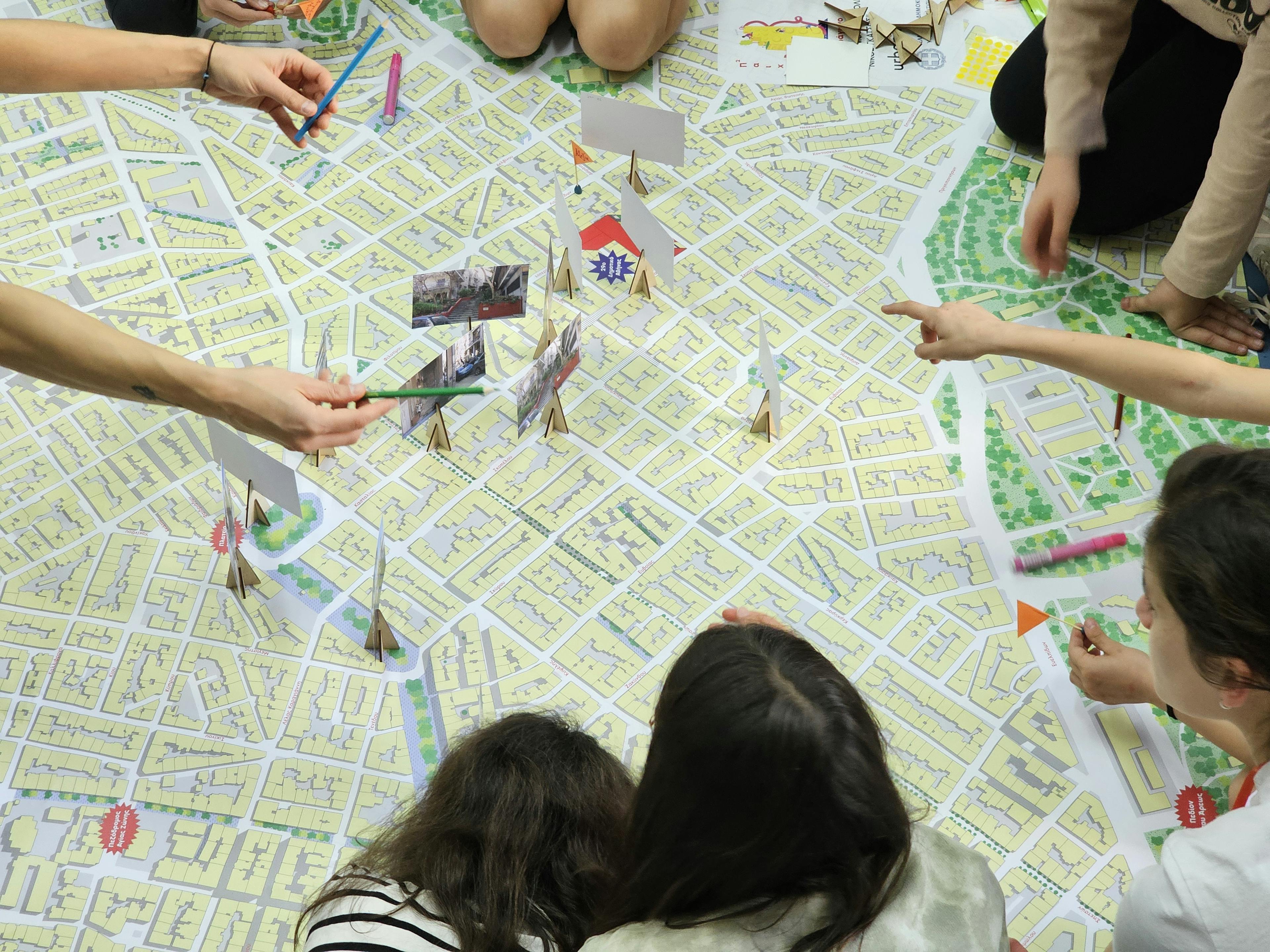
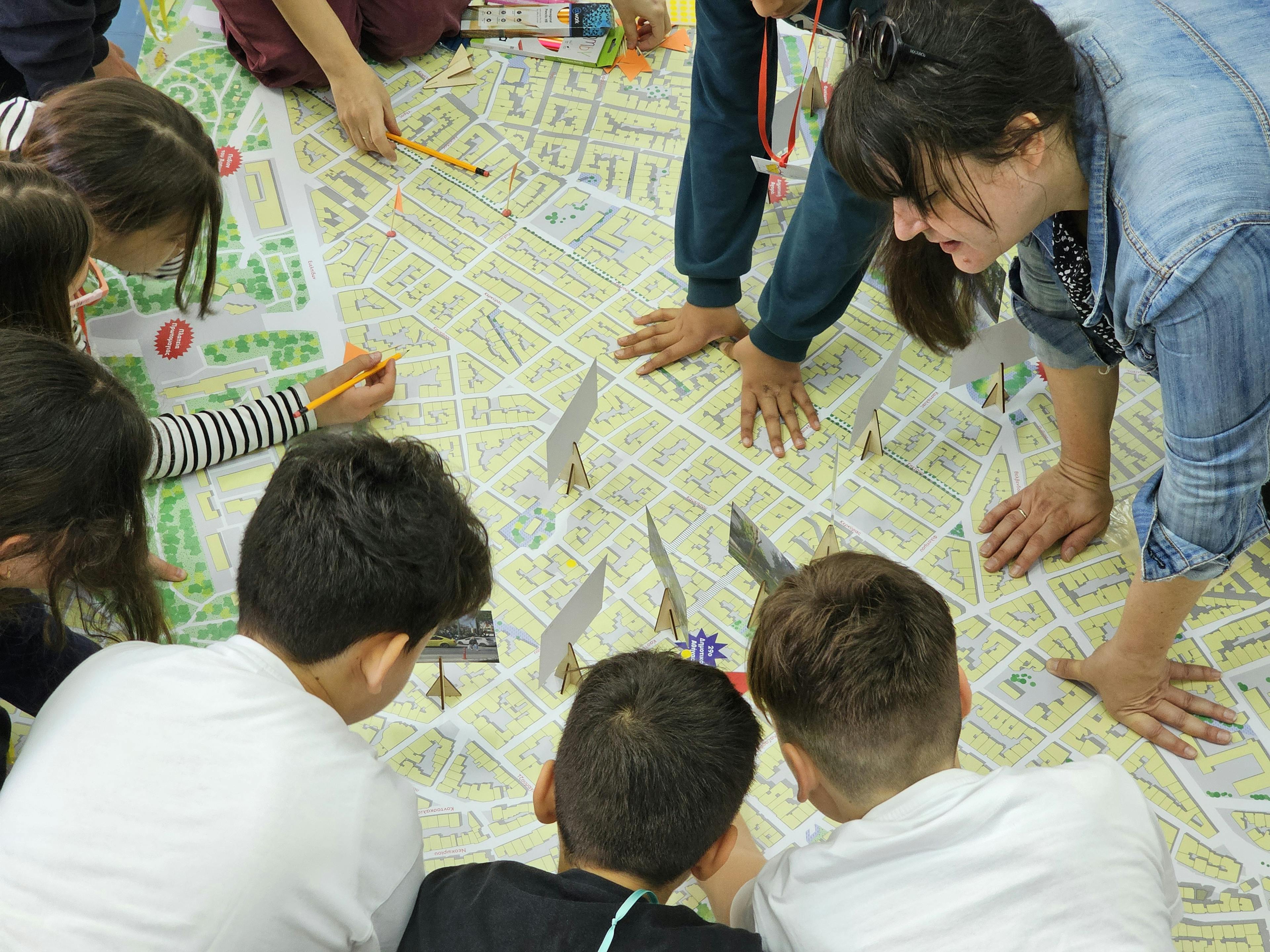
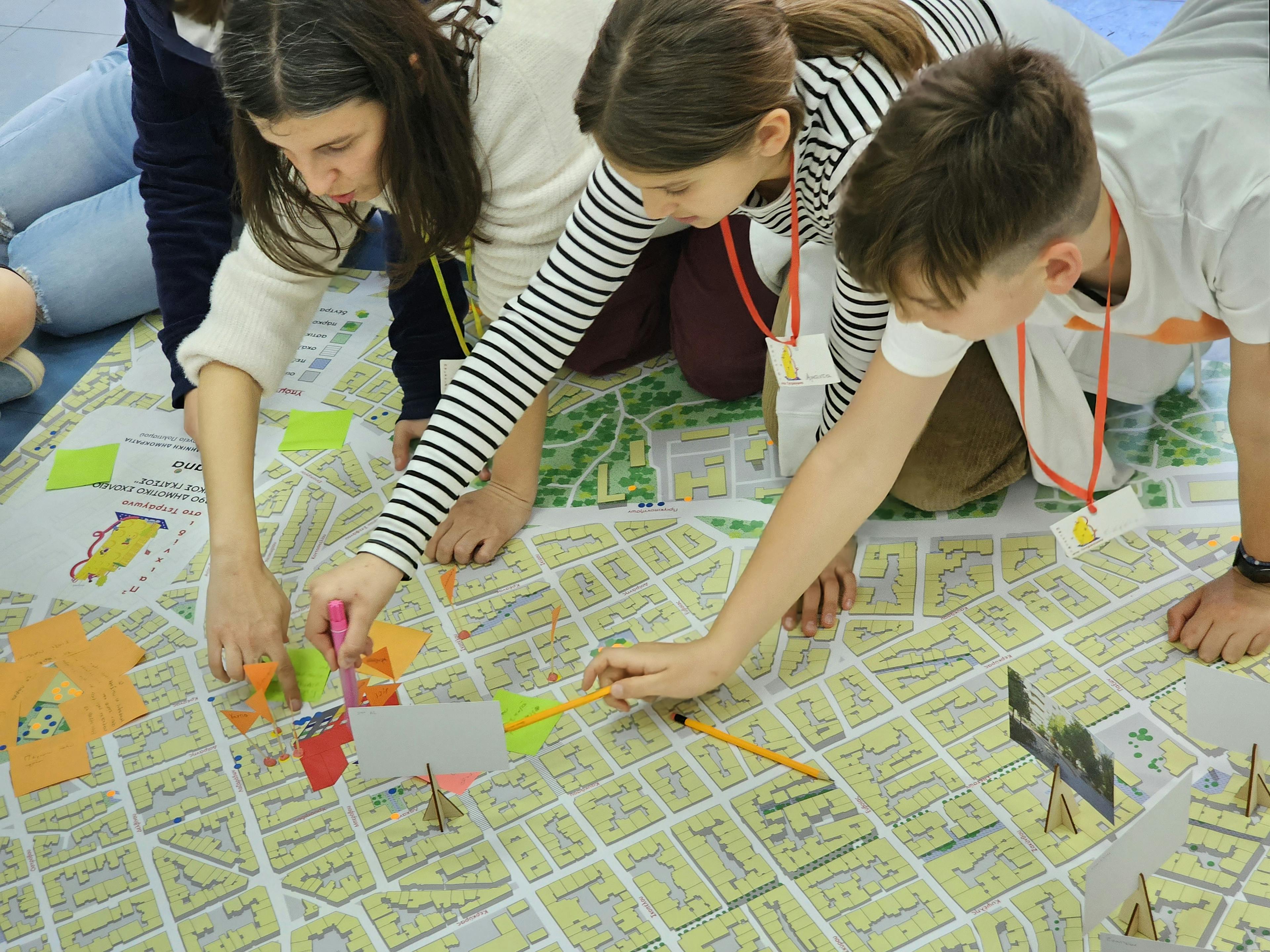
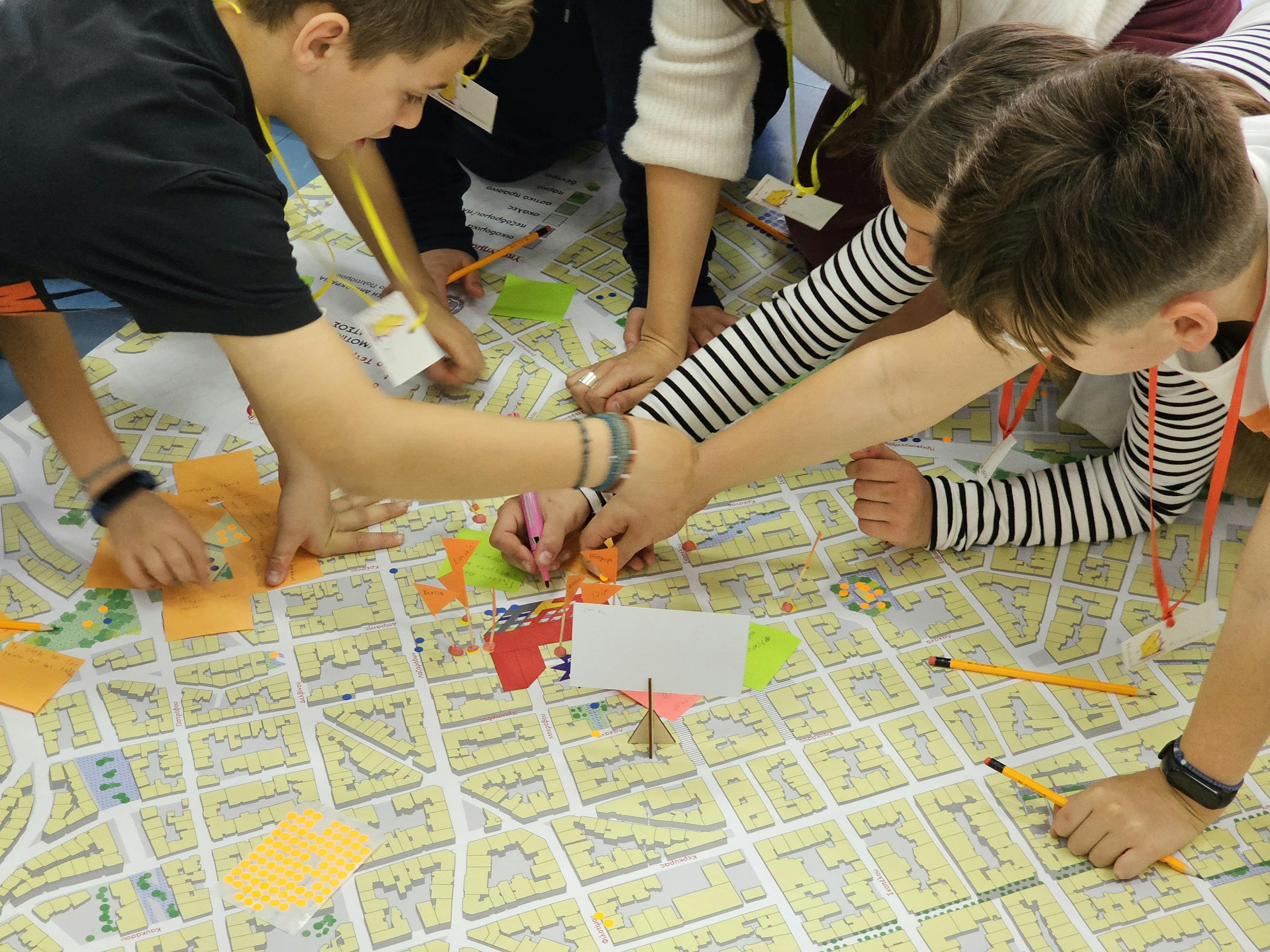
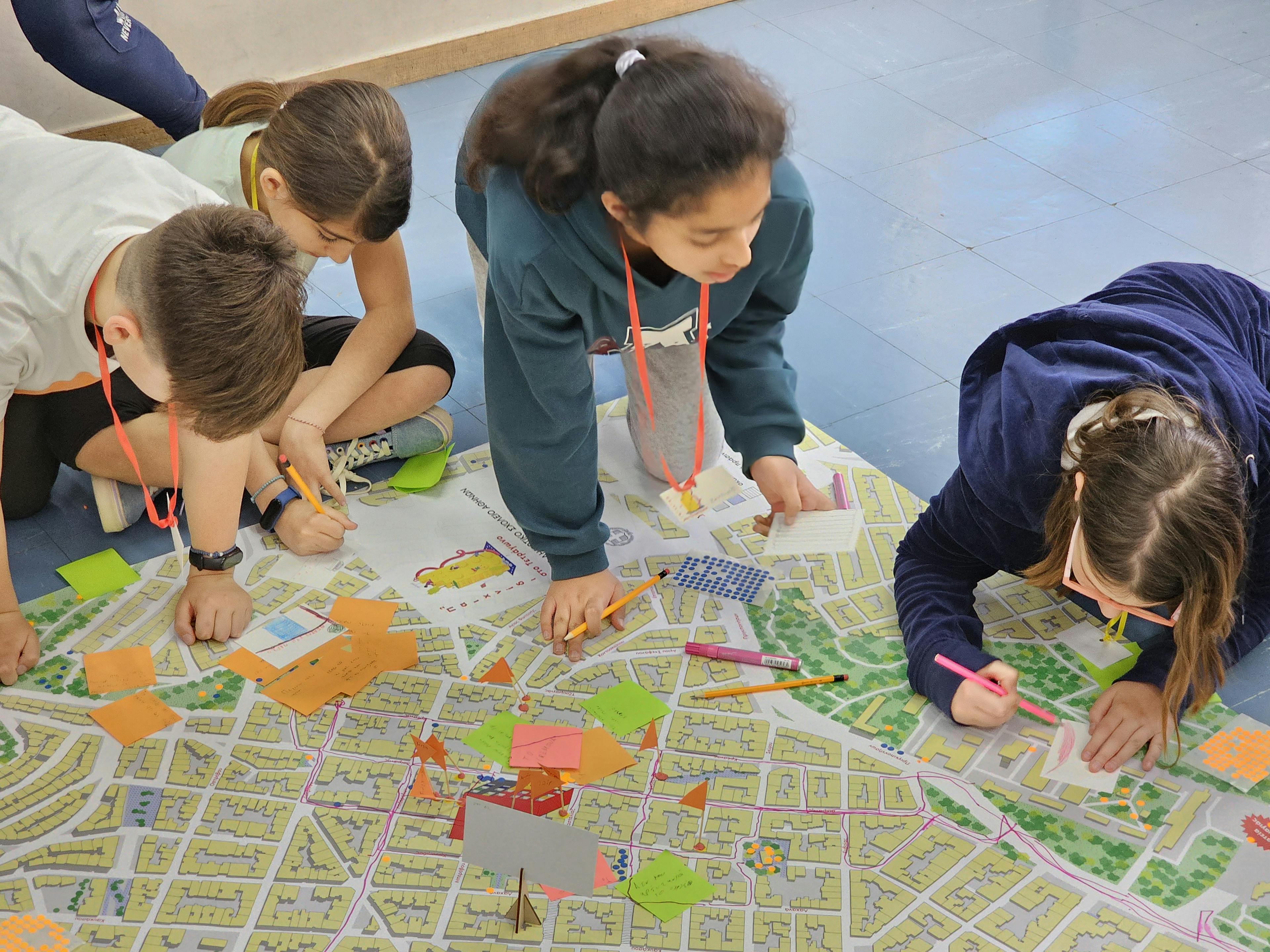
Kipseli faces a severe lack of green spaces, with only about 0.96 square meters of greenery per resident. PlaySquare addressed this by involving children from the 29th Primary School of Athens (placed in Kipseli) in a participatory research and design process. They explored their neighborhood, identified challenges and interesting spots, and collectively revitalized a space of their choice through mapping, sketches, collages, 3D models, and hands-on activities. The result is a lively space that reflects their needs and dreams for the neighborhood.
At the heart of PlaySquare is a participatory and interdisciplinary approach, empowering and enabling children to recognize their agency in urban design. They conducted peer research, gathered input from classmates, and developed proposals for the space. This involvement showed them that their ideas could directly shape their environment.
“I believe that children can also take part and share their opinions alongside adults. I would love to continue this project -to make the murals even more beautiful in this park and others.”
The initiative also encouraged children to connect with younger peers, visiting the nearby kindergarten to share their vision and ensure the space reflected the needs of all ages. Teachers played a crucial role in ensuring inclusivity, and parents and local residents contributed by donating materials and helping paint the mural.
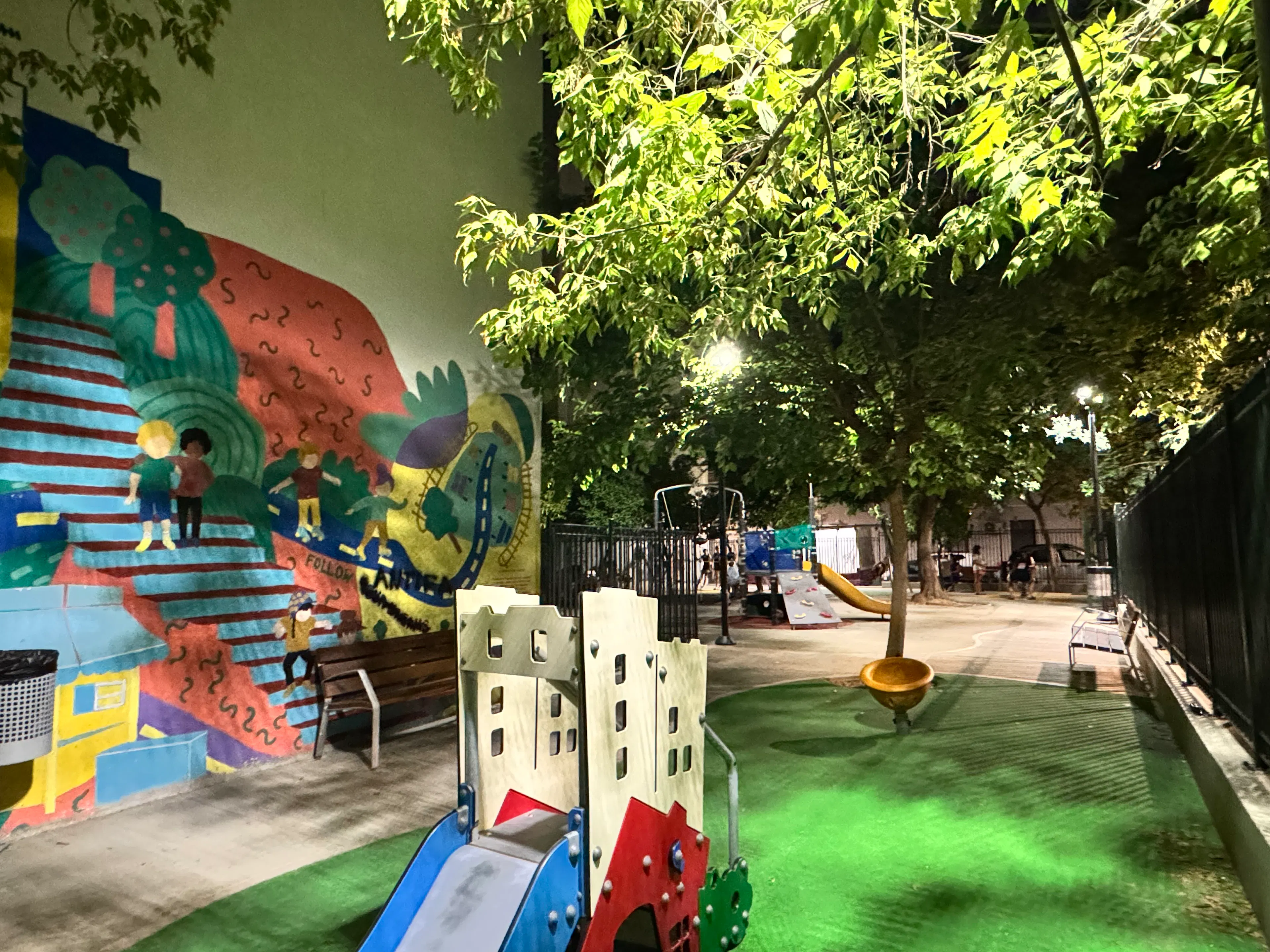
“You (URBANA) mentioned a mural at the beginning, but I never imagined it would be that big! When I went there with my mom, she was really surprised -in a good way. She looked at it and asked, ‘Who did this?!’ That’s when I proudly told her that we did it!”
Municipal officers also supported the project, ensuring the space’s long-term sustainability. Their involvement demonstrated the potential for alternative collaborations between local authorities and grassroots initiatives, securing the space’s continued use.
The PlaySquare Methodology
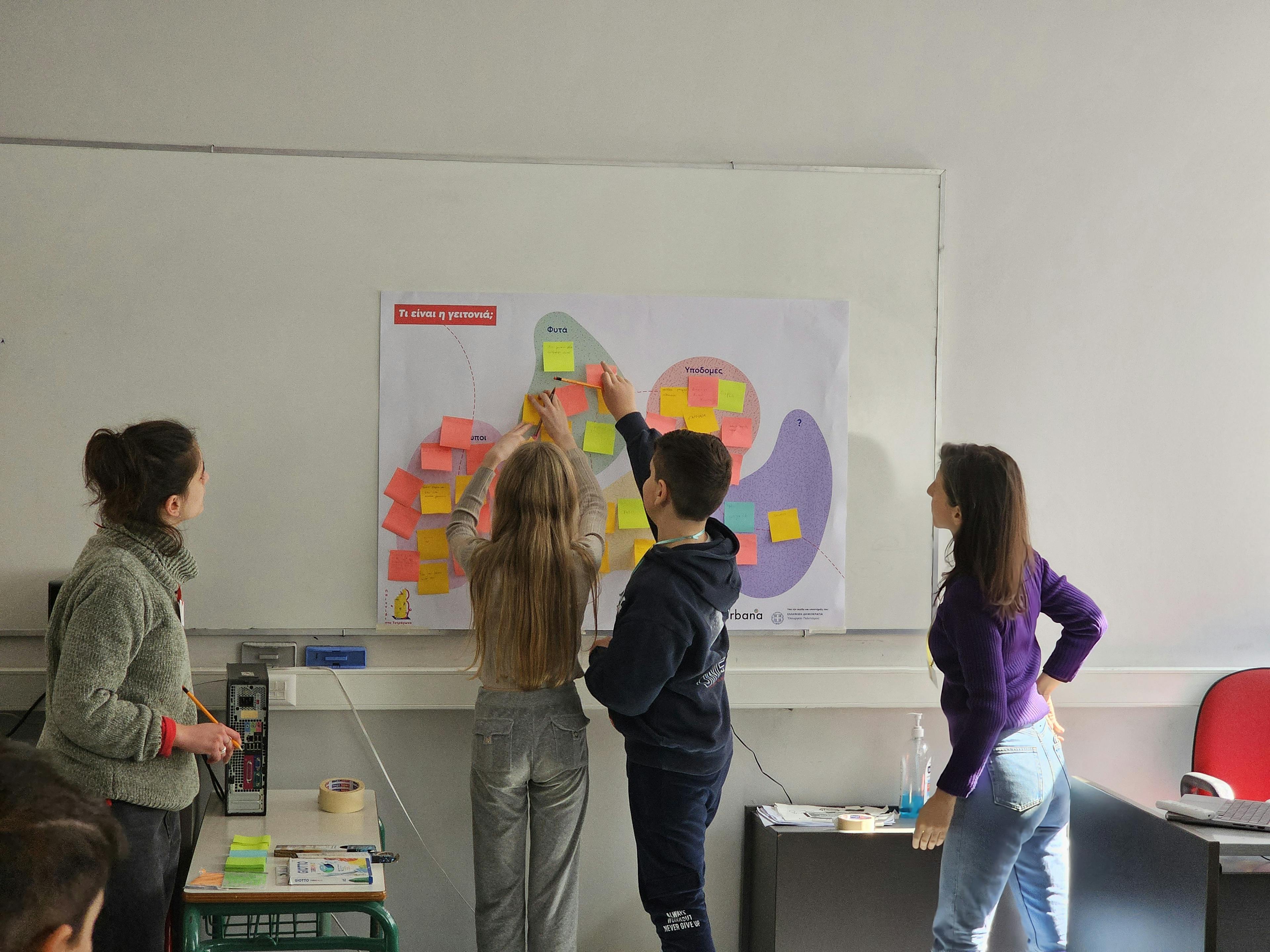
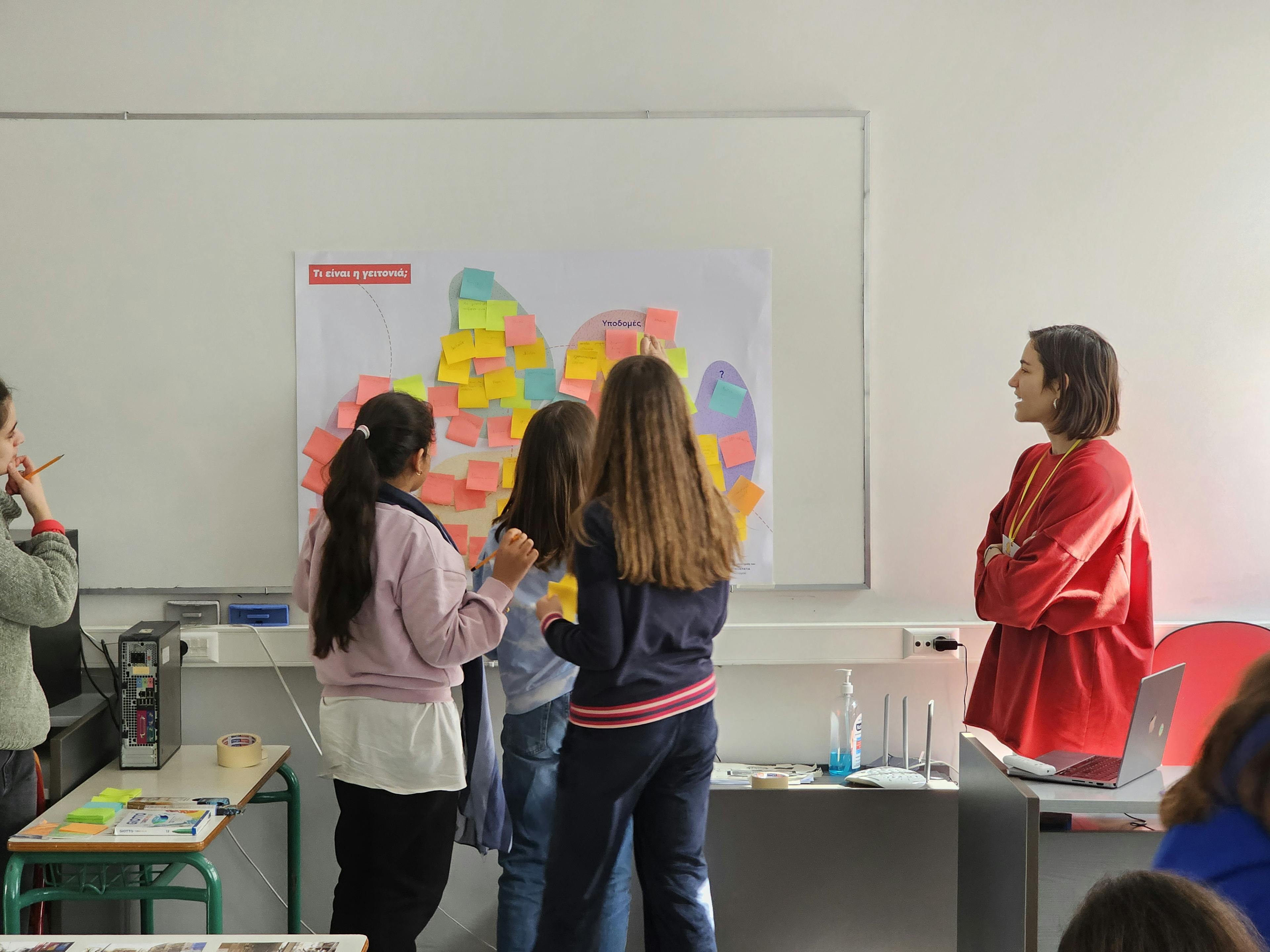
- Understanding the neighborhood: Children identified key elements (people, infrastructure, activities, nature) shaping their neighborhood.
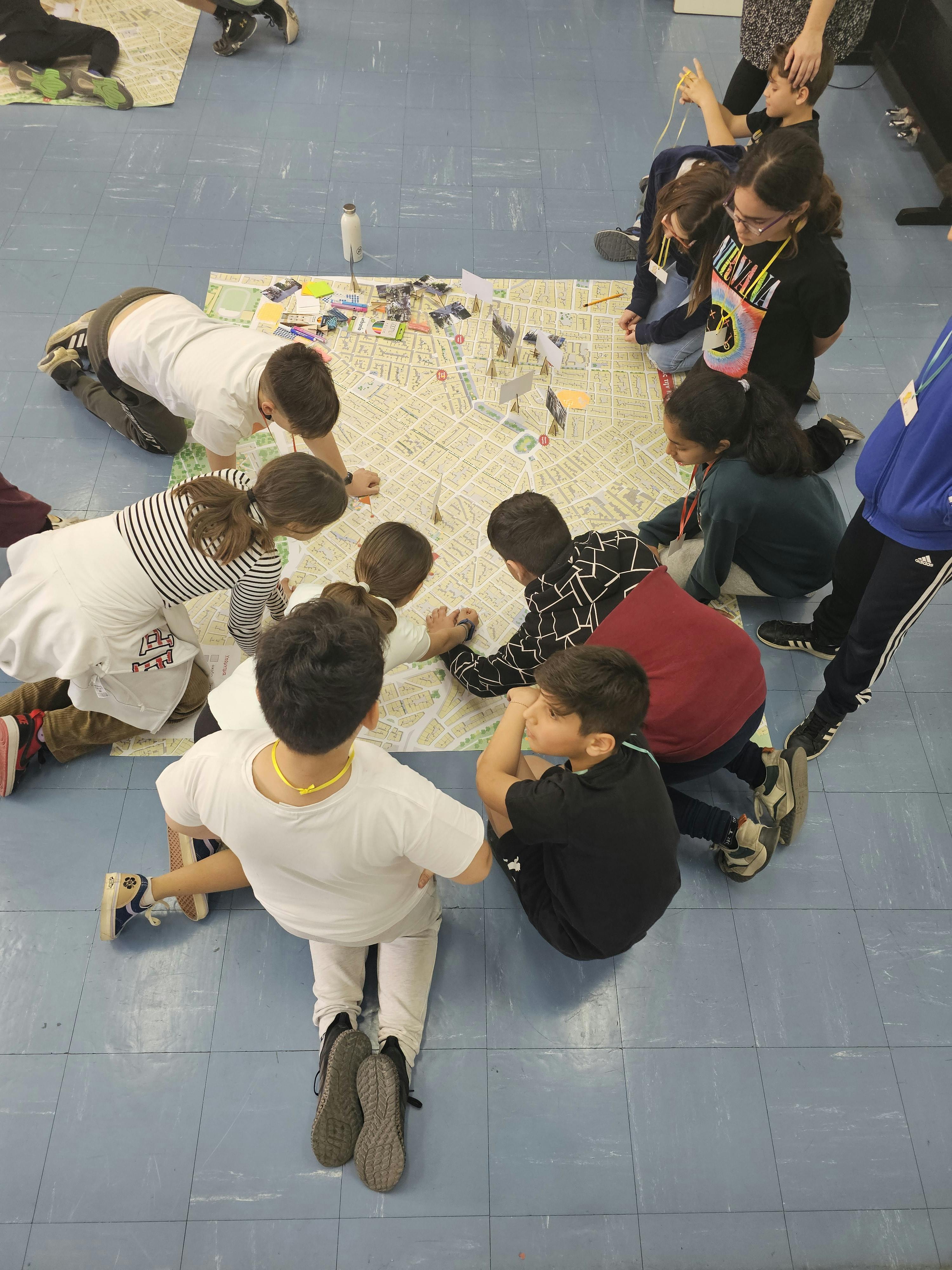
- Mapping and spatial connections: They visualized their daily routes and identified meaningful spaces.
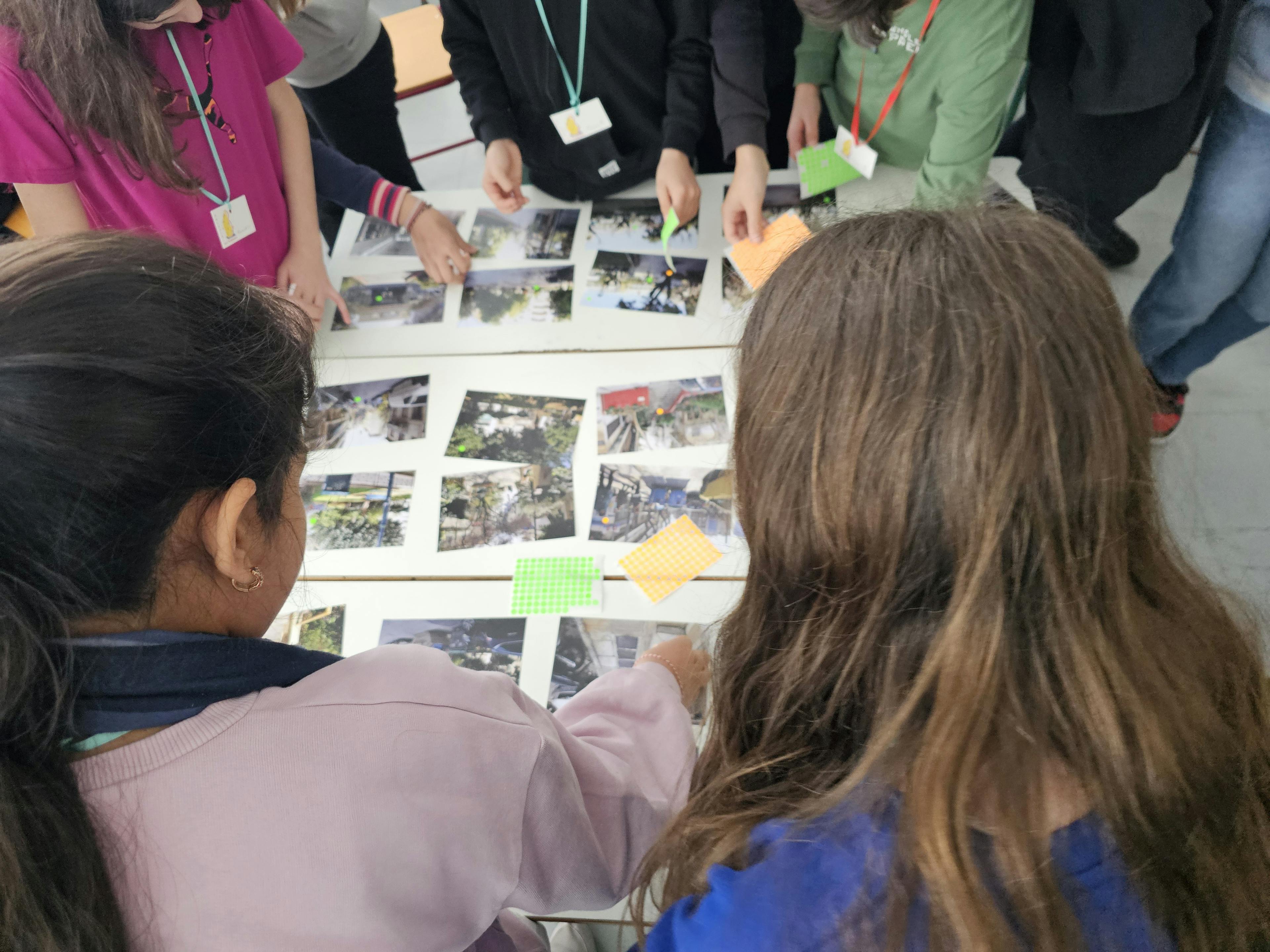
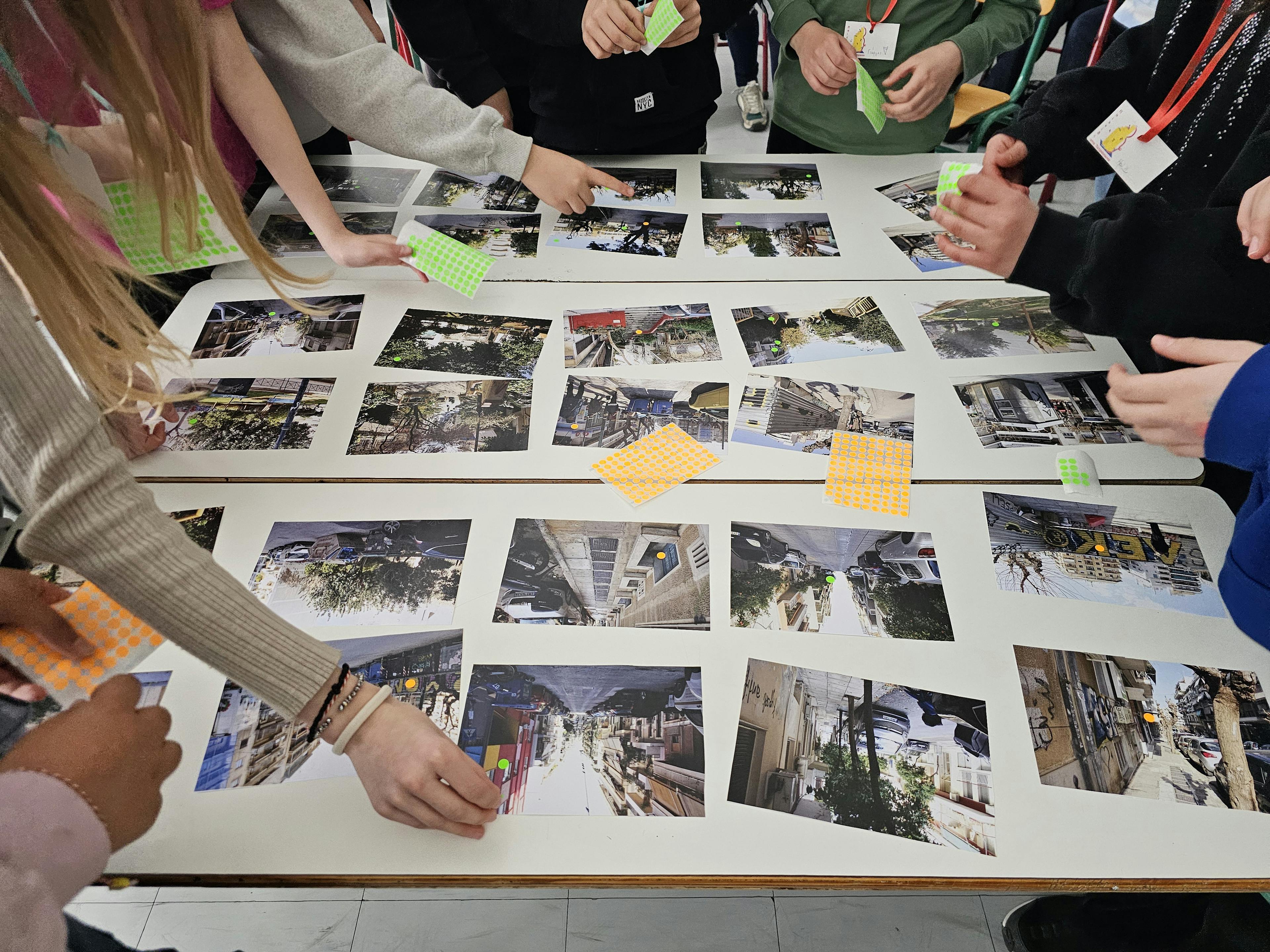
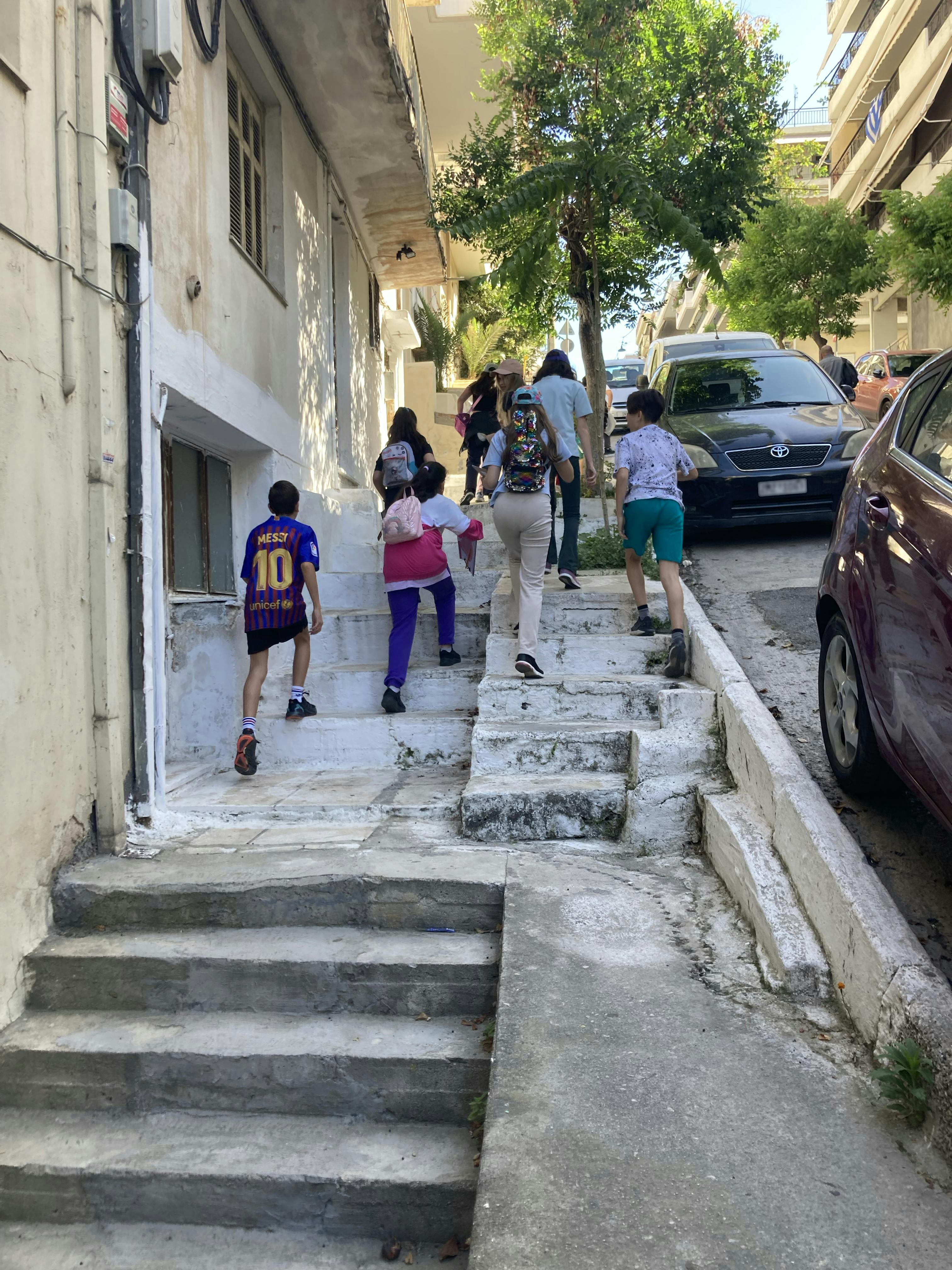
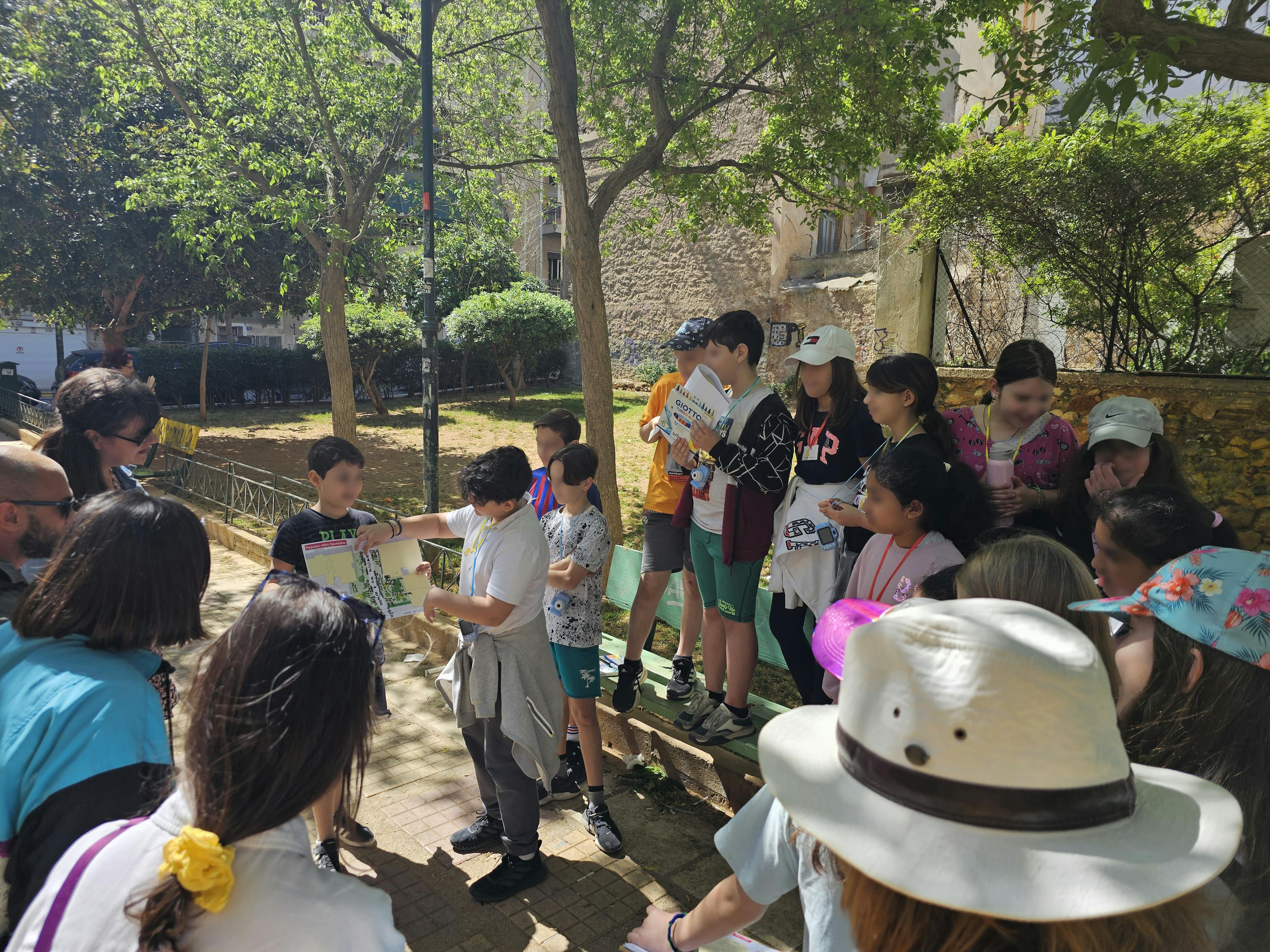
- Exploratory walks: Group walks helped them observe and reflect on their use of space, with a focus on informal play areas.
- Creating their own maps: They highlighted valued spaces and areas needing improvement.
- Proposing small-scale interventions: Children developed ideas for improvement through maps, sketches, collages, and 3D models.
- Participatory research / co-validation: They presented proposals at school and gathered input from peers to refine their ideas.
- Prioritizing ideas: Together, they evaluated and prioritized their proposals based on available resources.
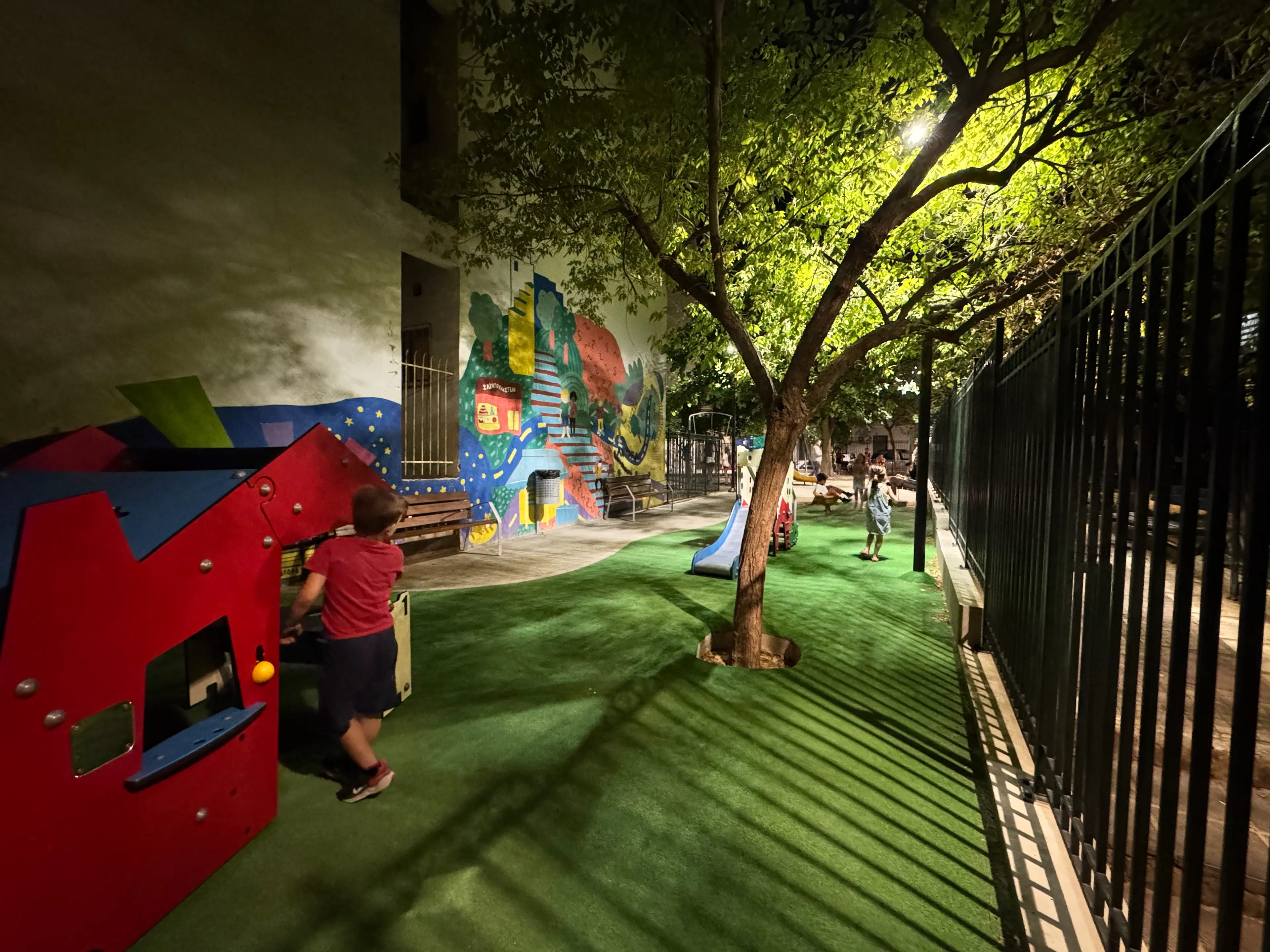
- Creating the mural: As a final step, they collaboratively painted a mural celebrating their vision for the space.
The project’s impact extended beyond the physical transformation of the space. It instilled a sense of agency and pride in the children, reshaping how the community interacts with public spaces.
“These days, when I go to the park, I see people taking photos of the mural and kids coming to play. This mural has completely changed the way the park looks. If someone walks by and sees it, they’ll be impressed -and if they hear that kids made it, they won’t even believe it!”
By designing spaces with children’s needs in mind -ensuring they are safe, comfortable, and engaging- PlaySquare proved that such interventions benefit the entire community. The revitalized space became a climate shelter, offering relief during heatwaves, and remains accessible to all.
“Now that people have seen what’s been done to the park and the mural, they’re taking better care of it. Before, they would leave their dogs nearby, but now they’re careful not to dirty the area and even clean up after them.”
A new chapter for the space
Today, the abandoned space that children explored, reimagined and helped reactivate through PlaySquare has become a new playground, offering the neighbourhood a much-needed public space for play and gathering. More than a physical transformation, the space has become part of everyday community life, filled with children, teenagers and families. Its evolution reflects the power of participatory processes to unlock the potential of overlooked places and contribute to lasting urban change.
PlaySquare is an inspiring example of how small, community-led initiatives can spark wider social change, creating more connected, resilient, and inclusive neighborhoods.
Period: October 2023 – June 2024
The project was implemented with funding from and under the auspices of the Hellenic Ministry of Culture and Sports.