
Inclusive Schoolyards
Inclusive Schoolyards is a long-term educational and participatory program developed by URBANA, combining pedagogical tools and architectural interventions to promote equality, inclusion, and coexistence in school environments. The program focuses on the schoolyard - the first public space children experience - as a critical setting where social relationships, hierarchies, and exclusionary patterns are formed.
Schoolyards are dynamic social spaces. Yet, in many cases, they reproduce inequalities based on gender stereotypes and dominant play cultures. Observations from primary schools show that a large proportion of schoolyards remain football-centric, resulting in the concentration of space by more energetic and confident children, while others are displaced to the periphery with fewer opportunities for play, rest, or social interaction.
“During playtime, we usually talk because we have nothing else to do. Or we sit in a corner with my girlfriends because the boys play all the time in the centre of the yard and we don’t have much space.” 5th grade student
These dynamics are rarely addressed, as schoolyard design often lacks participatory input, meaningful involvement of the educational community, and gender-sensitive evaluation criteria.
From pilot to long-term program
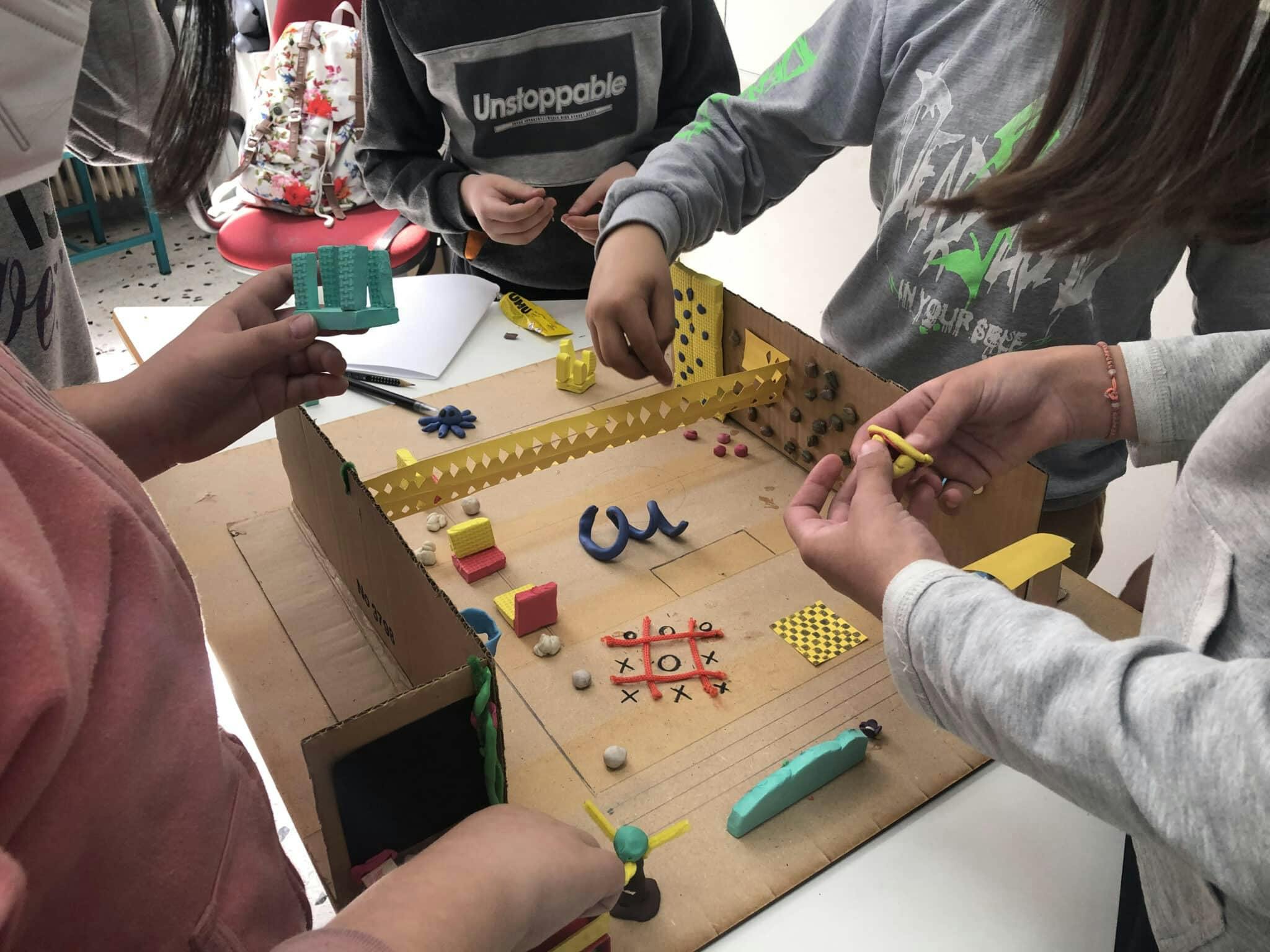
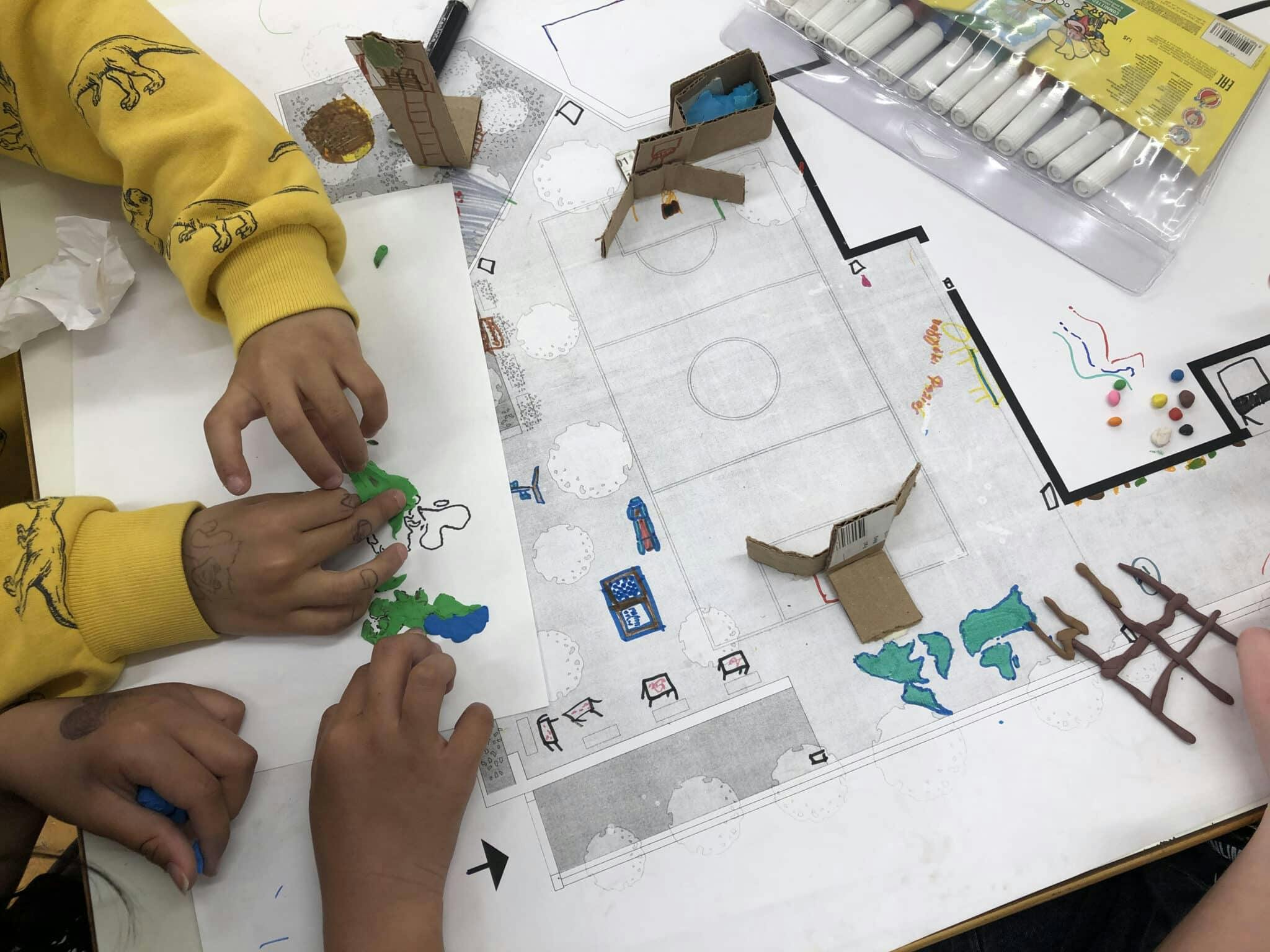
The program was first piloted during the 2018–2019 school year at the 45th Primary School of Athens (Kypseli). Over five months, students explored their schoolyard through participatory research, artistic expression, and architectural tools, identifying exclusion patterns and proposing spatial changes.
To live equally tomorrow, we need to play equally today!
The pilot laid the pedagogical foundation of Inclusive Schoolyards and led to the development of a structured methodology, later approved by the Institute of Educational Policy of the Hellenic Ministry of Education.
Expansion across Greece
During the 2021–2022 school year, Inclusive Schoolyards expanded to multiple schools across Greece:
- 93rd Primary School of Athens
- 29th Primary School of Athens
- 33rd Primary School of Trikala
- 47th Primary School of Heraklion, Crete
- 7th Nursery School of Nea Philadelphia (Athens)
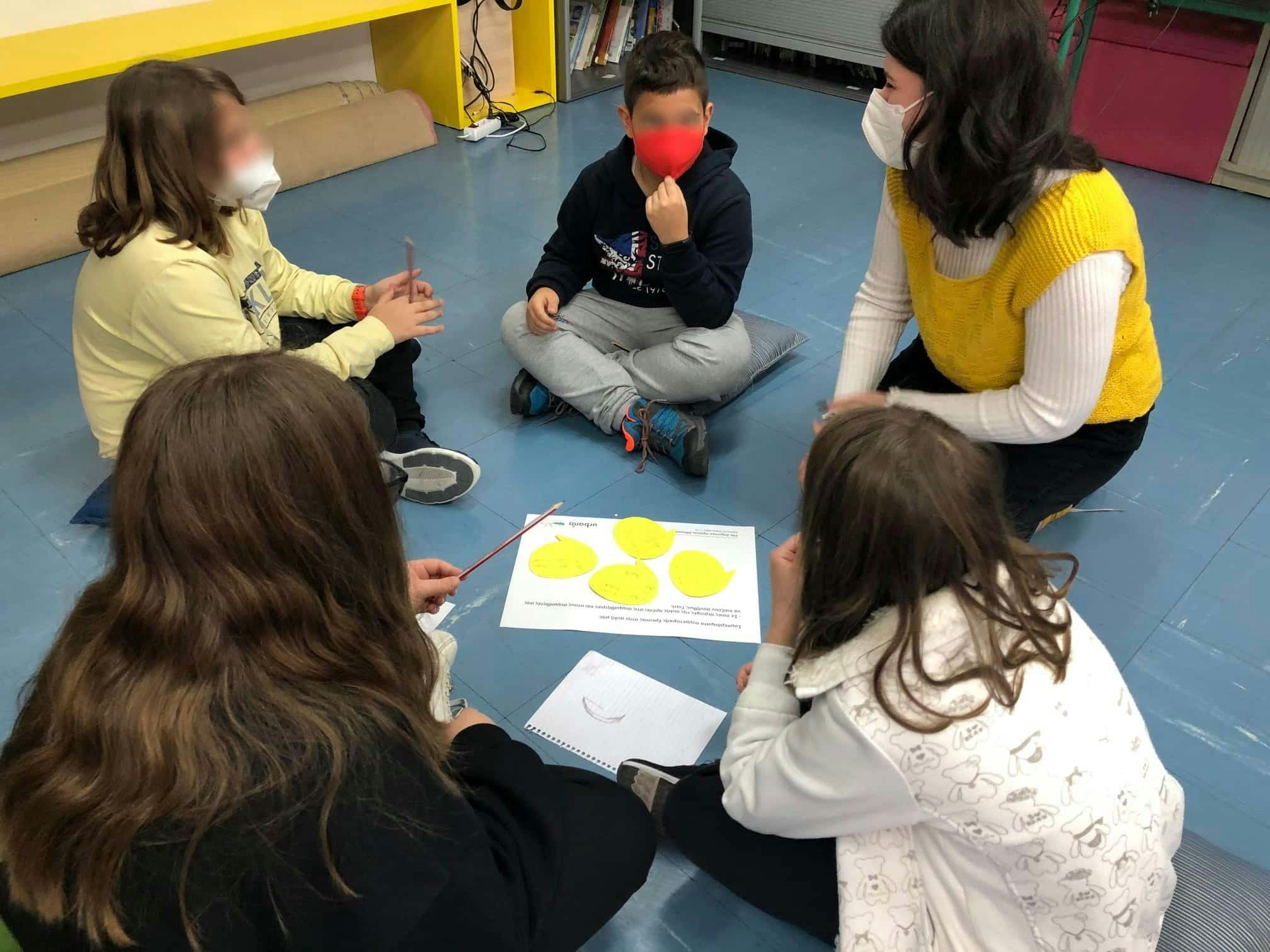
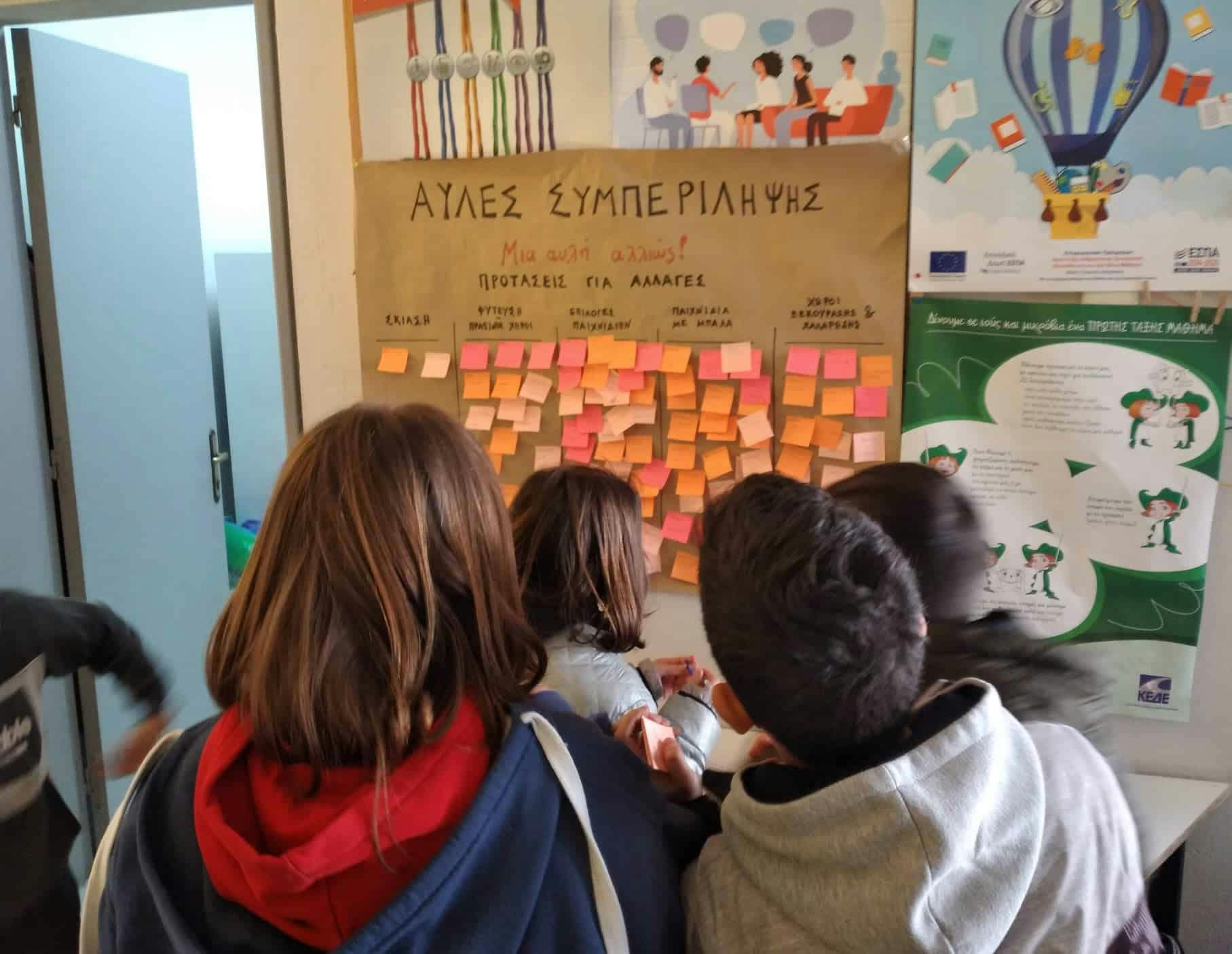
At this stage, the methodology was adapted for early childhood education, while a national learning community was created through teacher training workshops. Children collectively analyzed how their schoolyards functioned socially and spatially, recognizing that different children use space in different ways.
“The exploratory activities helped us understand that everyone experiences the schoolyard differently.” 5th grade student
Each school developed a collective spatial proposal, emphasizing coexistence between dynamic and calmer activities, using affordable and environmentally friendly materials.
From ideas to built space
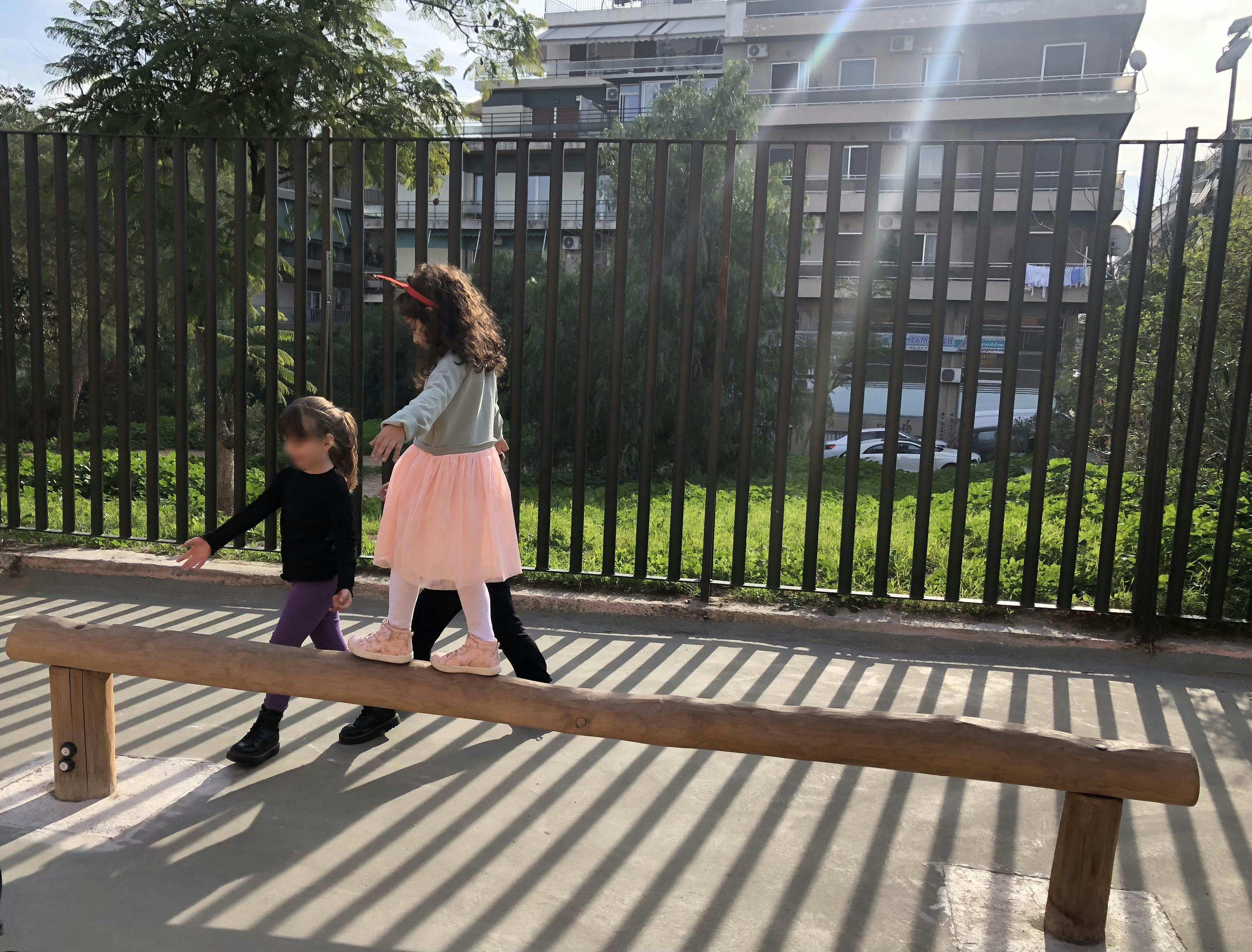
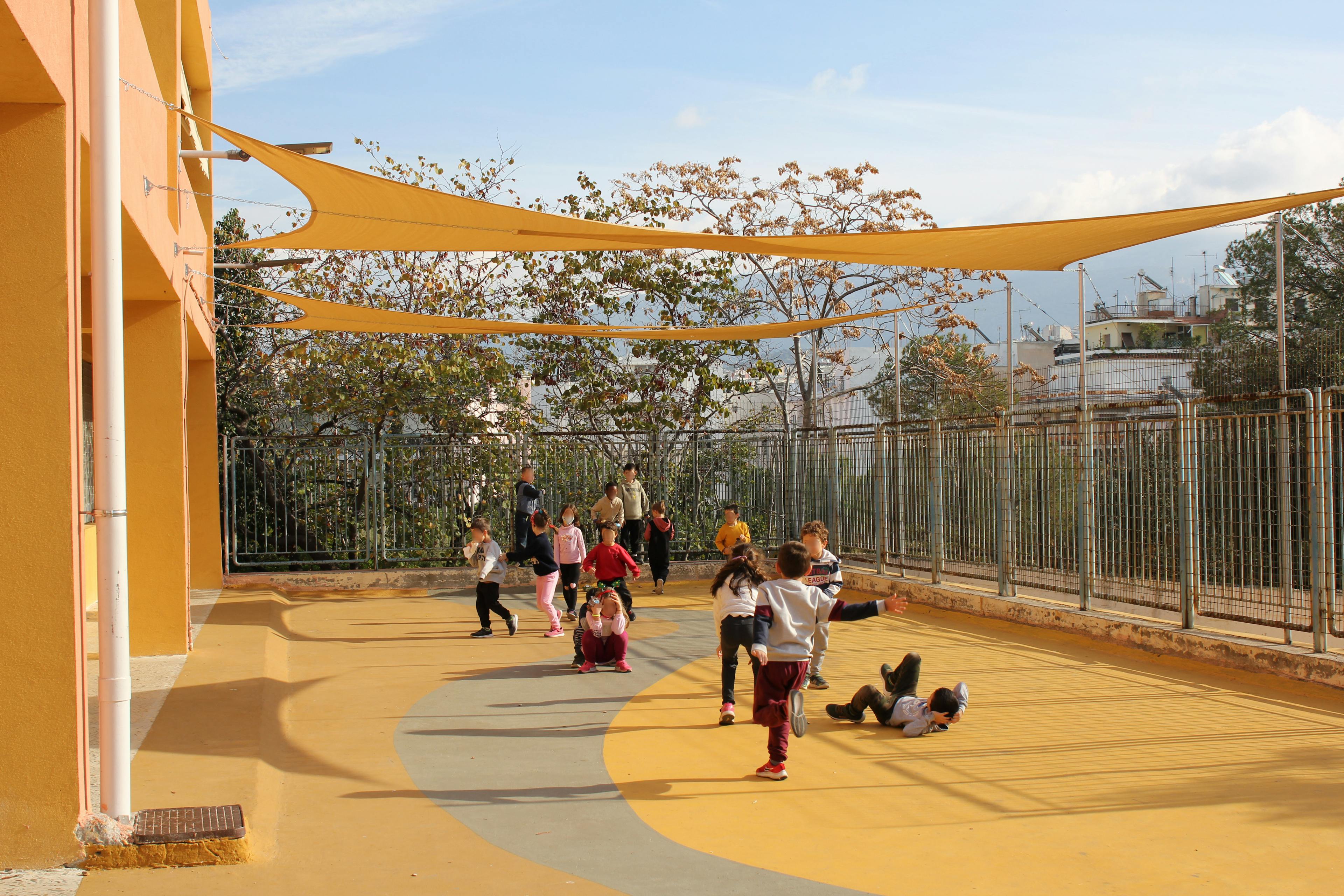
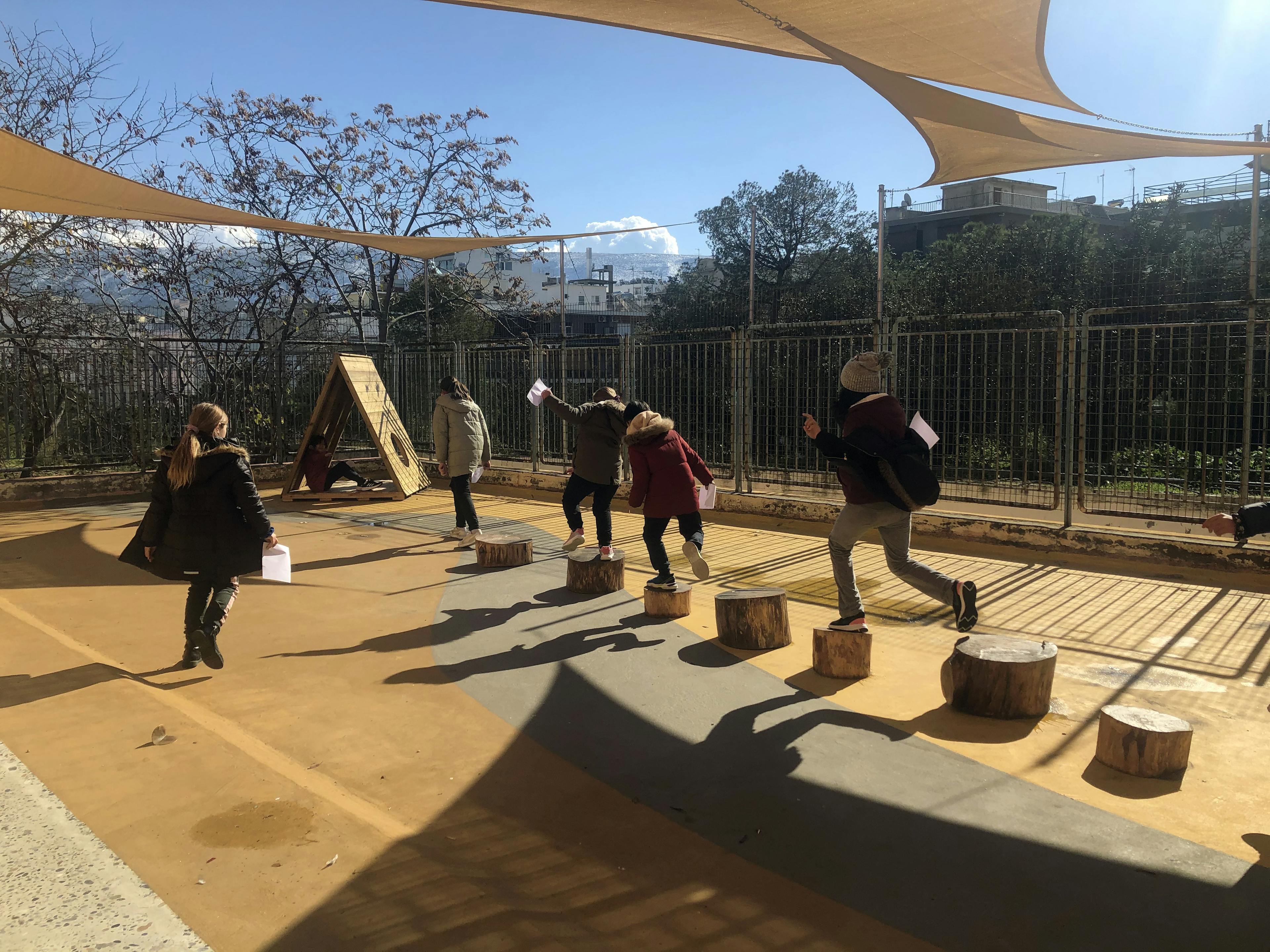
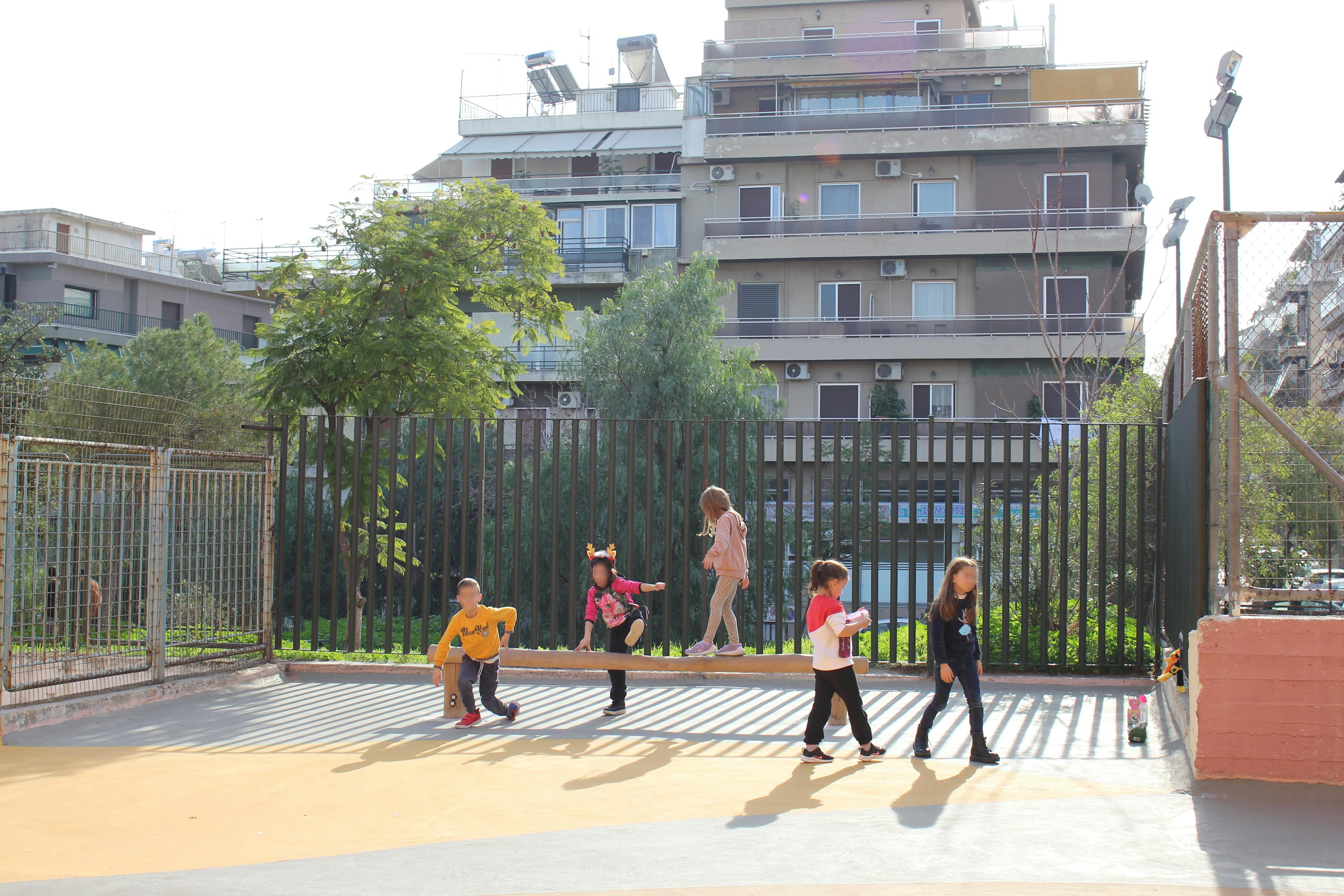
In 2022–2023, the program advanced to architectural implementation at the 33rd Primary School of Trikala and the 93rd Primary School of Athens. Previously unused or problematic areas of the schoolyards were transformed into inclusive spaces for play, rest, creativity, and social interaction, based directly on children’s ideas.
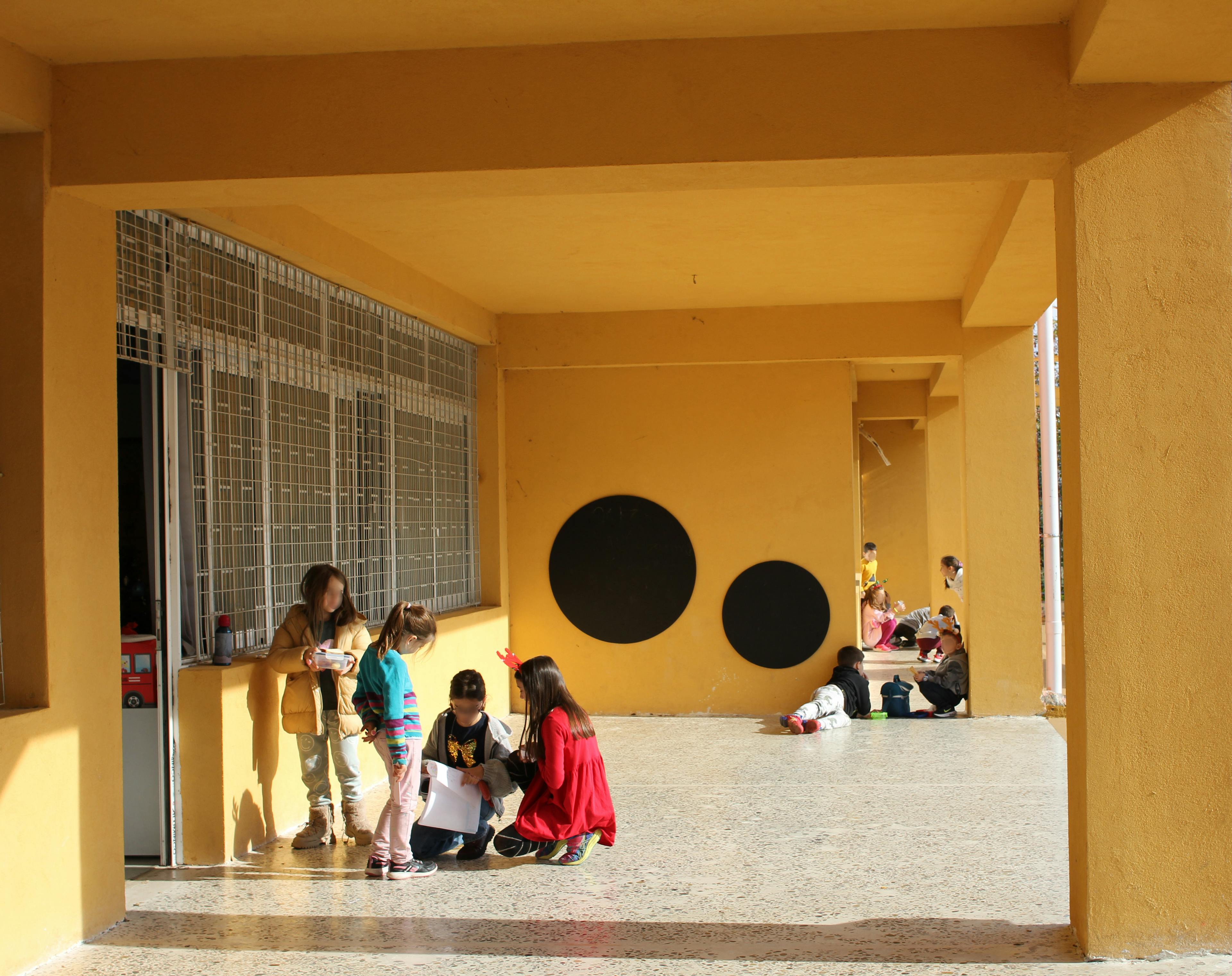
“The younger children sit in the playhouse and have their snack during the first break…”
Teachers and school leaders observed clear changes in how children used the space.
“Before, children would just run back and forth across the yard without any real purpose. Now the yard has areas for different activities, and the children genuinely enjoy their break.”
Principal, 93rd Primary School of Athens
“The children play much more mindfully. They are engaged in specific activities and more careful with each other.” Teacher, 93rd Primary School of Athens
Looking forward
Inclusive Schoolyards demonstrates how educational processes and spatial interventions can work together to promote equality from an early age. By empowering children to understand, question, and redesign their everyday environments, the program contributes to more inclusive school cultures and, ultimately, more inclusive cities.
Our vision is to continue expanding Inclusive Schoolyards to more schools, supporting environments where all children can play, coexist, and feel that the space truly belongs to them.
Recognition
Inclusive Schoolyards has received European-level recognition for its contribution to inclusive, sustainable, and people-centered design.
“Inclusive Schoolyards” was selected as a finalist in the New European Bauhaus Prizes 2023, among 61 finalist projects out of more than 1,450 submissions, for representing the New European Bauhaus values of beauty, sustainability, and inclusion.
This distinction highlights the program’s innovative combination of participatory education, spatial design, and social impact, and reinforces its relevance as a transferable model for inclusive public spaces.
Read more about inclusive school playgrounds in Equal Saree's guide.
Period: 2019 – 2023
The programme is approved by the Institute of Educational Policy (IEP) of the Hellenic Ministry of Education and Religious Affairs and has received funding from the Hellenic Ministry of Culture and Sports.
The architectural part for the 33rd Primary School of Trikala was funded through the Gendered Landscape project (URBACT III), while the constructions for the 93rd Primary School of Athens were funded by the Qualco Foundation.